
In an industry defined by global connectivity, scale, and precision, aviation training must reflect the same standards. Today, Intercontinental Aviation Academy (IAA) stands as one of the region’s fastest-growing and most internationally diverse aviation training institutions—built not merely as a flight school, but as a structured, scalable, multinational aviation platform.
Operating under the strategic umbrella of Intercontinental Aviation Enterprise (IAE), the academy has entered a new phase of maturity and strength. Recent developments have not been incremental—they have been transformational. IAA today represents operational discipline, international reach, and measurable scale.
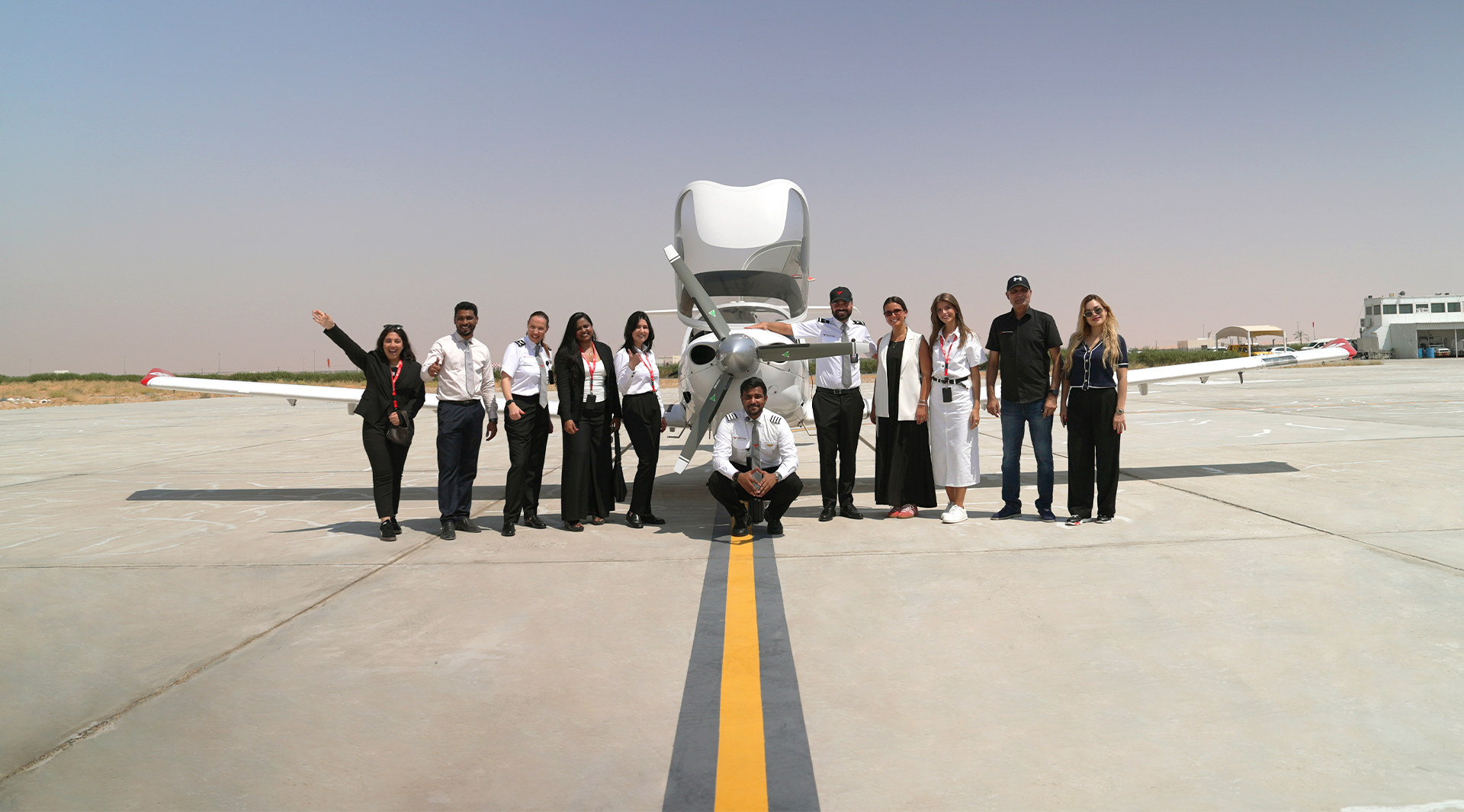
Across its locations, the academy now trains 350+ active cadets, representing 40+ nationalities. This is not a symbolic diversity statistic; it is a reflection of global trust in the IAA model. Students from the Middle East, Europe, Africa, Asia and even southern America, train side by side under unified standards, operational procedures, and a shared professional ethos.
Such diversity is deliberate. Commercial aviation operates across cultures, airspaces, and regulatory frameworks. By training within a multinational environment from day one, IAA cadets develop cultural intelligence, crew coordination maturity, and operational adaptability—qualities airlines increasingly demand.
This scale is matched by institutional depth. IAA’s team now exceeds 75+ employees and aviation professionals, drawn from 20+ nationalities. Flight instructors, ground instructors, examiners, compliance specialists, operations managers, and administrative leaders collectively form a robust international framework. The result is not only operational capability, but a training environment that mirrors real-world airline ecosystems.
Recent milestones across the academy’s network have reinforced this trajectory. Operational expansion, fleet reinforcement, simulator integration, and structured academic upgrades have been executed with discipline. The academy’s growth has been integrated—not fragmented—ensuring that quality, safety culture, and instructional standards remain consistent across all locations.
IAA’s development model is rooted in long-term positioning. Investments in infrastructure, aircraft, digital systems, and training methodology are aligned with a broader strategic roadmap. The objective is clear: to produce airline-ready professionals who are technically competent, operationally disciplined, and globally adaptable.
More importantly, IAA has moved beyond the perception of being a regional training provider. It is now recognized as a multinational academy with structured international presence, capable of accommodating diverse student pipelines while maintaining operational control and academic rigor.
The strength of Intercontinental Aviation Academy today lies in measurable scale:
These figures are not marketing points; they are indicators of institutional power and global positioning.
As aviation continues to globalize and airlines expand their networks, the demand for internationally prepared pilots will only intensify. IAA is positioned precisely at that intersection—where diversity meets discipline, and ambition meets structure.
Intercontinental Aviation Academy is not growing by coincidence. It is growing by design.
And this is only the beginning.



.png)